City-Fringe Industrial Property Singapore: Paya Lebar Strategies for Buyers
Buying industrial property in Singapore is never just about the unit. It is about the zoning label, the approved use rules, the physical logistics of moving goods in and out, and the tax and financing mechanics that determine whether you can actually hold, operate, or exit profitably.
If you are looking at a city-fringe pocket like Paya Lebar, you are usually aiming at a particular sweet spot: access to workforce catchments and transport links, combined with industrial product that can support e-commerce, light manufacturing, and other clean operational models. In practice, that means you should treat Paya Lebar industrial property like a system, not a purchase.
Below is a buyer-focused playbook anchored on the realities of B1 industrial zoning, strata industrial units, and the common transaction constraints that show up when you move from “I like the unit” to “I can make the numbers work.”
Why Paya Lebar behaves differently from the far industrial fringes
City-fringe industrial precincts are often chosen for urban logistics and businesses that need to stay close to customers and labour. Pockets such as Tai Seng, Paya Lebar, Ubi, Kallang, and MacPherson are frequently associated with e-commerce, light manufacturing, and R&D because they sit closer to workforce catchments and transport links.
What that means for you as a buyer is that demand tends to be more specific and operational. A unit that fits the day-to-day reality of packing, storage, or light processing can command tenant interest. A unit that struggles on access, goods lift suitability, ceiling height, or loading bay constraints tends to narrow your tenant pool quickly.
In Paya Lebar, that operational lens is even more important because many buyers are not just buying for “industrial use” in the broad sense. They are buying for a particular workflow: inbound deliveries, order picking, packing, quality checks, and outbound dispatch. The zoning label and the approved trade matter just as much as the floor area.
B1 industrial property Singapore: the rules that quietly shape your business model
Many city-fringe industrial assets fall under B1 industrial zoning. B1 is intended mainly for clean industry, light industry, warehouses, public utilities and telecom uses. The practical implication is not merely “clean uses are allowed.” It is that uses needing a nuisance buffer of more than 50 m are generally not allowed, and some non-standard uses are only possible case by case if buffer requirements are met.
There is another rule that often surprises first-time industrial buyers: use quantum. In a B1 development or strata unit, at least 60% of the floor area or GFA must be used for industrial purposes. The remaining area is limited to ancillary or supporting uses and approved secondary uses.
This “60% industrial use” requirement is not a small administrative detail. It tends to determine Space Nova showflat how flexible a unit can be if you ever need to pivot. If your current plan is heavily production or processing based, you are generally aligned with the intent. If your plan is partly show floor, office-only, or something that feels more commercial than industrial, you need to be careful about whether your operational mix could end up squeezed by the approved-use framework.
What this means for buy industrial property Singapore decisions
When you buy industrial property Singapore, you are buying into a regulatory box. If your business is light manufacturing, food packing or processing-related work, e-business operations, printing or publishing, or media-like clean uses, the B1 structure is generally compatible with those profiles. But if you are contemplating a use that is not “clean industrial” by nature, you may need separate approval or you may find it constrained.
So before you shop for a unit, get clear on what your “primary industrial activity” actually is, and how much of the unit it realistically occupies. That prevents the common scenario where a unit looks affordable, but your operational layout only allows you to genuinely use part of the space industrially.
B1 vs B2 industrial zoning: where the difference shows up in real buildings
A lot of buyers start by comparing B1 industrial property Singapore to B2. The simplest way to think about it is this: B1 is aimed at clean industry and lighter operational profiles, while B2 is positioned for heavier industrial use.
The practical differences you often notice are not just about permitted activities in principle. They show up in the sort of specifications that accompany the product category. For example, B2 units commonly reflect higher floor loading and different height specifications than B1 flatted factories, which aligns with the expectation of heavier use potential.
Even if your business is “not heavy” today, you should still be honest about future plans. If you foresee machinery, higher loading needs, or a growth model that leans more production-heavy, B2 can be structurally more forgiving. If you stay in clean, light workflows, B1 can be the better fit because the approved framework is closer to your operational reality.
This is the trade-off: B2 potential may come with different building specs and, depending on the market, different pricing and liquidity patterns. B1 may be cheaper and more accessible for light operations, but it still enforces the industrial-use quantum and the clean-industry intent.
Freehold vs leasehold industrial Singapore: the decision that changes your risk
For many buyers, “freehold industrial property Singapore” sounds like the ultimate target because tenure feels like certainty. The constraint is that freehold industrial space is relatively scarce. Much of the industrial supply, especially new supply, is on leasehold land.
From typical industrial offerings, you may see a range of lease terms such as 60-year, 30-year, or 20-year lease structures depending on the estate and product. That matters because your exit timeline and your financing comfort need to align with the tenure reality.
Freehold vs leasehold industrial Singapore, in practice, comes down to matching your business cycle and investment horizon. If you plan to hold and operate long enough, leasehold may be perfectly workable. If you are buying mainly for investment liquidity and you expect to rotate capital quickly, tenure can change how safely you can “wait out” tenant turnovers and market cycles.
What I recommend in Paya Lebar is not to get hypnotized by tenure headlines, but to treat freehold as a premium you can pay only if the unit’s specs, approved use, and tenant-fit justify it.
Strata industrial units Singapore: you must think like an operator and an investor
Many buyers look at strata industrial units Singapore because it can provide access to industrial property without acquiring an entire building. Strata also changes how you evaluate technical suitability and operational dependability, because your unit’s internal logistics must work within the building’s shared systems.
Key technical checks for strata industrial units commonly include floor loading, ceiling height, goods-lift access, loading-bay provision, and whether the trade matches the approved use. These items may sound like “engineering details,” but they directly impact your cost of operations and your ability to satisfy tenant expectations.
Ceiling height can affect racking and workflow. Goods-lift access influences whether you can move goods efficiently without bottlenecking. Loading bays change dispatch speed and driver friendliness. Floor loading governs what equipment you can safely install. And the approved use match is the regulatory line that decides whether your tenancy plan is defensible.
If you are buying for industrial property investment Singapore, you should also ask yourself what your likely tenant base will accept. The more specific your unit’s technical constraints are, the more the tenant pool narrows, and the more your rental yield may depend on a very particular operational profile.
Ramp-up industrial units Singapore vs flatted factories: logistics is the hidden rent driver
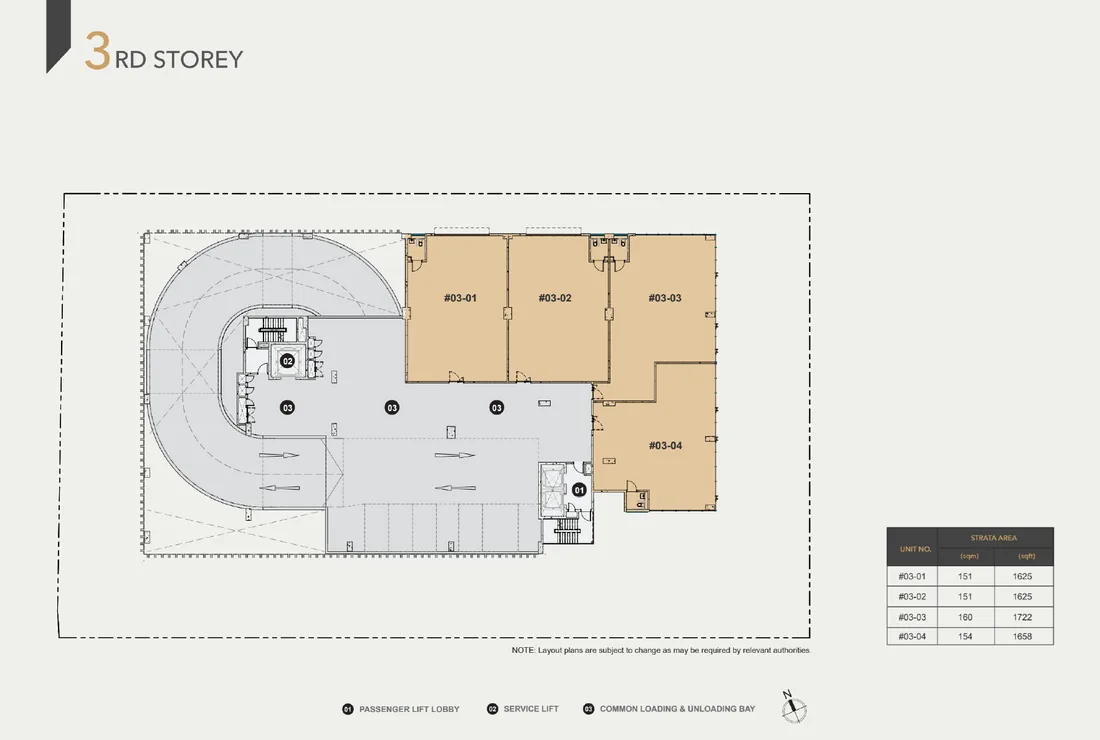
One of the biggest practical differences in industrial units is how vehicles and loading happen. Ramp-up factories provide direct vehicular access to units for loading and unloading. Flatted factories are generally accessed via common corridors, lifts, and loading bays. That difference in layout affects everything from how efficiently you can receive and dispatch goods to how easy it is to retrofit your workflow.
When buyers skip this and focus only on interior fit, they often underestimate the operational cost of Space Nova freehold industrial friction. A ramp-up setup can reduce handling steps. A flatted configuration may require more reliance on lifts and shared loading systems, which can be fine, but you must check whether the building’s goods movement matches your daily rhythm.
In Paya Lebar, where many businesses are urban logistics or light industrial operations, that daily rhythm matters. A tenant that runs tight dispatch schedules will feel layout friction quickly, and tenants do talk to other tenants.
The buyer’s finance reality: industrial property loan Singapore and transaction costs
Industrial property transactions come with their own financing and stamp duty mechanics. A common fear is that industrial purchases are penalized similarly to residential buying. In reality, additional buyer’s stamp duty (ABSD) is tied to residential property acquisitions. Industrial property is not subject to ABSD.
What does apply is normal stamp duty rules for the purchase, and if you sell, seller’s stamp duty may apply to disposals of industrial property depending on holding period. The schedule commonly applies as 15% if sold within 1 year, 10% within 1 to 2 years, 5% within 2 to 3 years, and none after 3 years.
This schedule is a big deal for investors because it changes your risk tolerance for “wrong timing.” If you think you might renovate and stabilize a space over a couple of years, your exit plan still needs to account for the possibility of paying SSD on disposal if you sell within those windows.
GST and the developer or GST-registered seller angle
If you buy a new non-residential property from a GST-registered seller or developer, GST is payable on the purchase. The buyer’s practical takeaway is to model all-in cash needs. Even if the unit’s price looks attractive, a GST component can shift the affordability and the hurdle rate for investment returns.
Buying industrial property under company name
Buying industrial property under company name is common for buyers holding assets for business use or investment. Stamp duty treatment has different rules for residential ABSD contexts, but for industrial disposals, seller’s stamp duty can apply based on holding period regardless of buyer profile. So if you are buying through a company structure, the operational decision should still be focused on your eventual selling timeline, not just the initial purchase mechanics.
On financing itself, industrial buyers can be assessed differently from residential borrowers. Market practice reflects that property investment financing depends on lender assessment and that non-residential loans often follow commercial terms rather than housing-loan rules. The takeaway is simple: speak to your lender early, and assume industrial property loan Singapore discussions will require a business and investment rationale, not just personal affordability.
Industrial property stamp duty Singapore: what to plan for before you sign
Many buyers underestimate how much stamp duty structure influences your net returns. For industrial acquisitions, the key planning points from the rules you should know are:
First, ABSD does not apply to industrial property purchases. Second, seller’s stamp duty can apply when you dispose, and the applicable rate depends on how long you hold. Third, if you purchase new non-residential property from a GST-registered seller or developer, GST may apply on the purchase.
If you are viewing Paya Lebar industrial property as a business asset, this becomes a timing and cash management exercise. If you are viewing it as industrial property investment Singapore, it becomes a hurdle-rate exercise. Either way, you should model your exit and potential sale under realistic holding periods, rather than assuming you will always hold for long enough to avoid SSD.
Industrial property rental yield Singapore: how zoning and layout shape the “rent ceiling”
Industrial property rental yield Singapore is often discussed as if it were uniform across the market. In reality, yield depends on tenant demand, lease structures, and how easily you can match the unit to an approved use and the unit’s physical constraints.
From the B1 use quantum structure, at least 60% of the floor area must be used for industrial purposes, with the remainder limited to supporting and approved secondary uses. That framework shapes what types of tenants can comfortably occupy space without creating compliance problems. In other words, zoning is not only about what is permitted, it is also about what is practical to run as a tenant.
Also, because strata industrial units have technical requirements, a unit with better floor loading, ceiling height, goods-lift access, and loading-bay provision can serve more operational profiles. When the tenant base is broader, rental competition can be healthier.
But even with strong specs, industrial resale liquidity tends to be trade-specific and sensitive to approved use, lease tenure, strata size, and building specs. That means your “yield today” is only part of the picture. You also need to think about what a future buyer will think when you exit.
A practical Paya Lebar buying approach that avoids expensive mistakes
The best strategies for buying in Paya Lebar often look less like “find the cheapest price” and more like “filter for operational fit.” You are buying a regulated, technical product, and the buyer who understands the constraints tends to negotiate better because they can explain why a unit is or is not viable.
Start with use and allocation, not just floor area
Because B1 requires at least 60% of the floor area/GFA be used for industrial purposes, you should validate your intended trade and how much of the space will be genuinely industrial in your day-to-day operations. If the concept is flexible, plan it so that the industrial portion is not borderline.
If you are considering B1 vs B2, do not treat the zoning label like a marketing term. Think about whether the operational load and workflow align with B1’s clean/light intent or B2’s heavier potential. The wrong category can mean your business model is always one approval step away from uncertainty.
Then check the building logistics through the lens of your workflow
Many buyers tour a unit, stand inside, and judge space feel. That is not enough. You need to check goods movement options: goods-lift access, loading-bay provision, ceiling height, and floor loading. If the unit is ramp-up versus flatted, the access story changes your operational cost.
For Paya Lebar, where tenants often run time-sensitive urban logistics, you should pay attention to dispatch and receiving efficiency. You do not want your business to become dependent on workaround handling steps that add cost every day.
Finally, confirm tenure and cash costs early
Lease tenure affects long-term risk, and for industrial property in general, leasehold is common. Freehold can be scarce. If you are drawn to freehold industrial property Singapore, treat it as a premium product and verify that the unit’s specifications and approved-use fit are equally strong.
On cash costs, map out stamp duty mechanics: normal BSD for industrial purchases, and potential seller’s stamp duty if you dispose within the holding windows. If the acquisition is from a GST-registered seller or developer for a new non-residential property, account for GST in your all-in numbers. And if you are buying under company name, plan the exit timeline realistically, not optimistically.
What to verify during due diligence in Paya Lebar
You can save yourself months of regret by running due diligence like an operator. You are not only checking documents, you are checking whether the unit can support your approved use in a way tenants will accept.
Here is a tight verification checklist that aligns with the common technical checks used for strata industrial units and the zoning logic for B1:
- Confirm the zoning fit and the approved use intent, especially the B1 framework and industrial use expectations
- Assess whether at least 60% of floor area/GFA can be genuinely industrial under your operating plan
- Check floor loading, ceiling height, goods-lift access, and loading-bay provision for your equipment and workflow
- Clarify whether your intended trade matches the approved use, so the unit can stay compliant under tenancy
- Evaluate whether ramp-up access or flatted access aligns with your inbound and outbound logistics needs
If any one of these is fuzzy, negotiation should be cautious. Industrial units can look similar on paper, but one missing fit detail can decide whether you struggle to attract tenants or whether your business absorbs unnecessary handling costs.
Two buyer profiles, two different Paya Lebar strategies
Not everyone buys industrial property for the same reason. The same unit can make sense for a business operator and fail for a pure investor.
If you are buying for your own operations, your priority is continuity. You care about ramp-up industrial units Singapore or flatted factory logistics because your cost structure depends on access and goods handling. You care about approved use match because you want to run without regulatory friction. You care about strata industrial unit specs because you will likely install equipment and design workflow around floor loading, ceiling height, and lift access.
If you are buying industrial property investment Singapore style, your priority is tenant fit and exit optionality. You still need the same technical checks, but you are looking for how broadly you can lease the unit to compliant tenants. Your rental yield expectations should be weighed against future resale liquidity, which tends to be trade-specific and sensitive to approved use and building specs.
Either way, you should treat B1 rules as part of the commercial thesis. When B1 requires at least 60% industrial use, the market tends to price units accordingly because tenant compliance is part of the reality.
Common negotiation angles in city-fringe industrial deals
City-fringe industrial buyers often negotiate on factors that are harder to “feel” during a short viewing. If you want Paya Lebar industrial property that performs, your negotiation should reflect operational constraints and regulatory compliance risk.
One angle is technical readiness. If the unit lacks goods-lift access convenience, has ceiling height that limits racking and workflow, or has loading access that forces costly handling, the effective rent is lower because the unit is harder to operate. Another angle is tenure. If you are offered a lease term that reduces long-term optionality, your valuation should reflect that risk.
A third angle is compliance clarity. If your intended trade is close to the boundary of what is appropriate for B1 or if you are unsure about how your allocation would meet the 60% industrial use expectation, you should negotiate with conservatism. The “cheap now” scenario is common in industrial, but it usually ends up being expensive when the operational plan needs approvals or changes.
Final decision framework: aligning zoning, specs, and timeline
If you are buying in Paya Lebar, the best strategy is to align three things early: zoning logic, unit logistics, and your timeline.
B1 industrial zoning is designed for clean/light industry and it carries practical use constraints, including the 60% industrial-use quantum. That framework is usually compatible with e-commerce support, light manufacturing, and similar clean operations, but it is not a wildcard for any commercial conversion. B1 vs B2 is ultimately about whether the operational profile needs heavier specs such as higher floor loading and different height expectations.
Then you match the physical reality. Ramp-up versus flatted access changes day-to-day efficiency. Strata industrial units require scrutiny on floor loading, ceiling height, goods-lift access, and loading-bay provision.
Finally, you manage cash costs and exit risk. ABSD does not apply to industrial purchases, but seller’s stamp duty for industrial disposals can apply based on holding period. GST may apply on new non-residential purchases from GST-registered sellers or developers. Industrial property loan Singapore discussions will depend on lender assessment under commercial terms, so you should pressure-test your financing rationale early.
If you do these steps with discipline, Paya Lebar industrial property can work as an operational base and an investment, not just a property purchase. The “city-fringe advantage” becomes real only when the unit’s zoning fit, technical specs, and your business workflow line up cleanly from day one.